AR Enabled Chormatic Customization
Woven AR Painted Assembly: Augmented Hybrid Fabrication
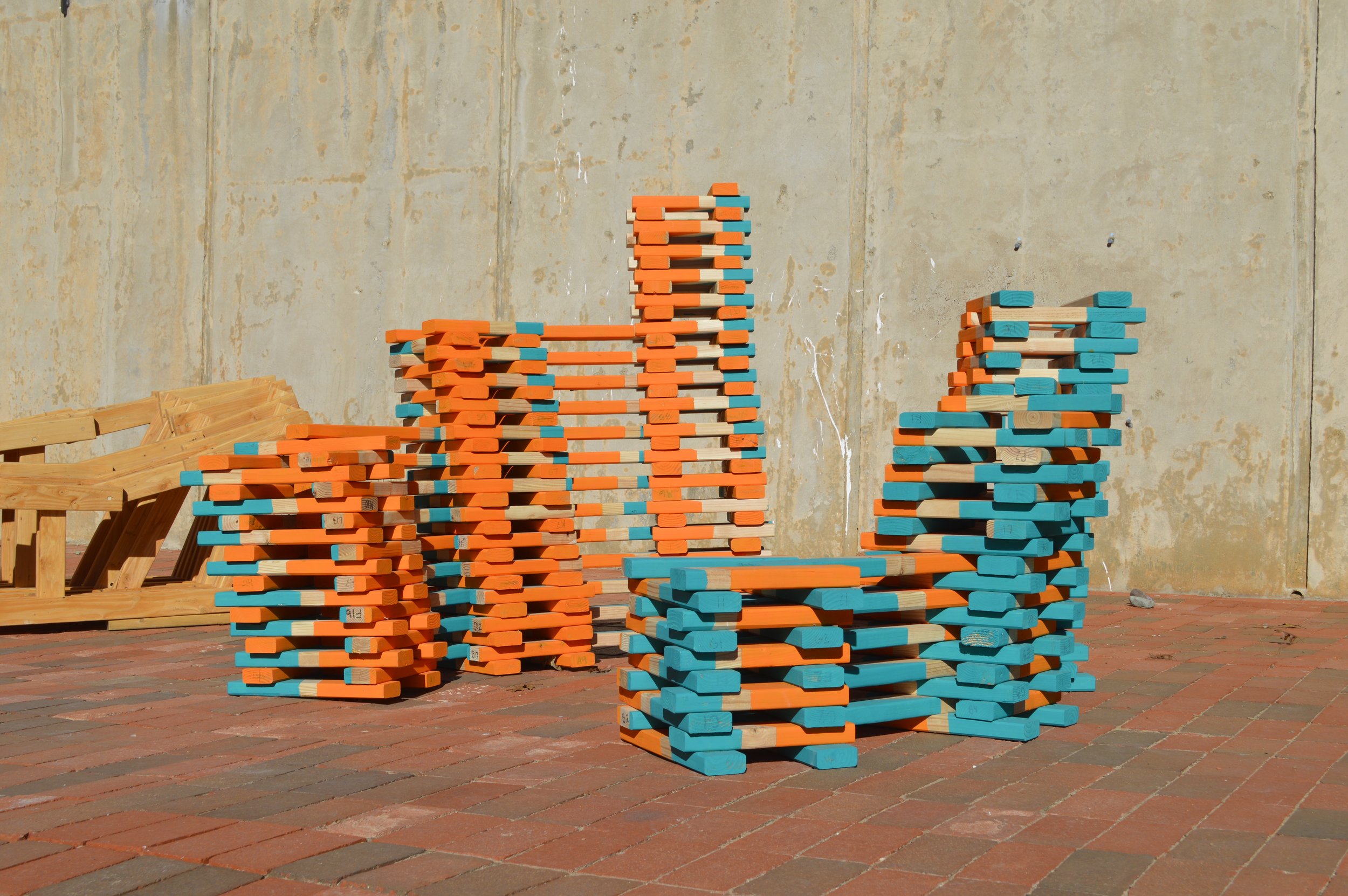
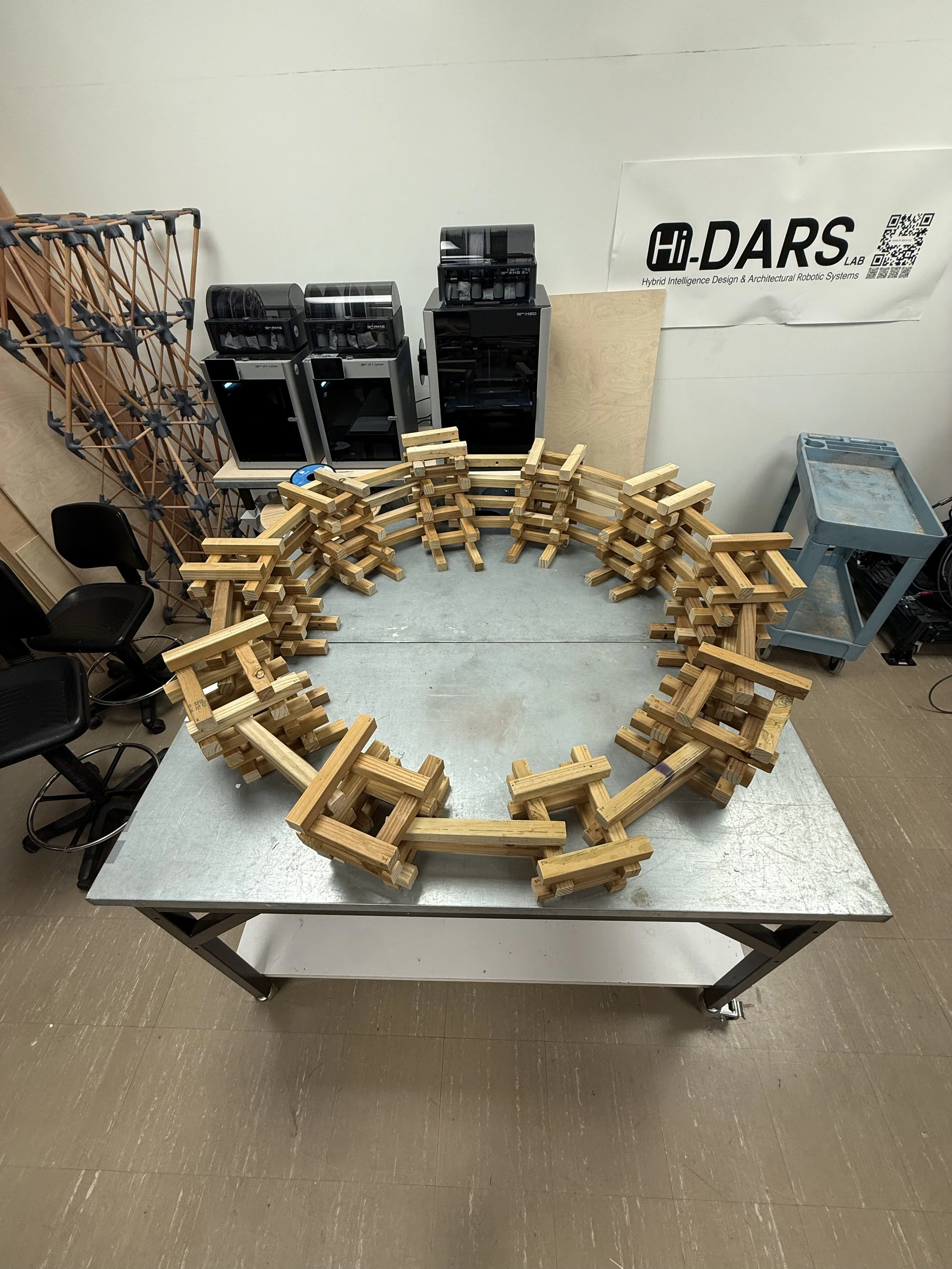
Woven AR Painted Assembly explores how augmented reality can extend computational design beyond fabrication and assembly into the realm of manual craft and surface articulation. The project utilizes a single parametric model to coordinate the geometry, identity, placement, and coloration of standardized timber components throughout cutting, assembly, disassembly, painting, and reassembly. AR guidance directs the manual fabrication and placement of individual elements, while alphanumeric component tags maintain digital-to-physical correspondence and traceability throughout the process. A computational coloration system assigns each timber element a unique two-tone configuration, which is transferred manually through AR-guided marking and painting to produce a continuous gradient across the reassembled structure. By combining parametric design, augmented reality, and hands-on fabrication, the project demonstrates a workflow in which computational precision and human variation coexist, positioning AR not only as a tool for geometric assembly but also as a medium for digitally mediated craft and post-production surface articulation.
METHODS
Computational Design and Chromatic Generation :
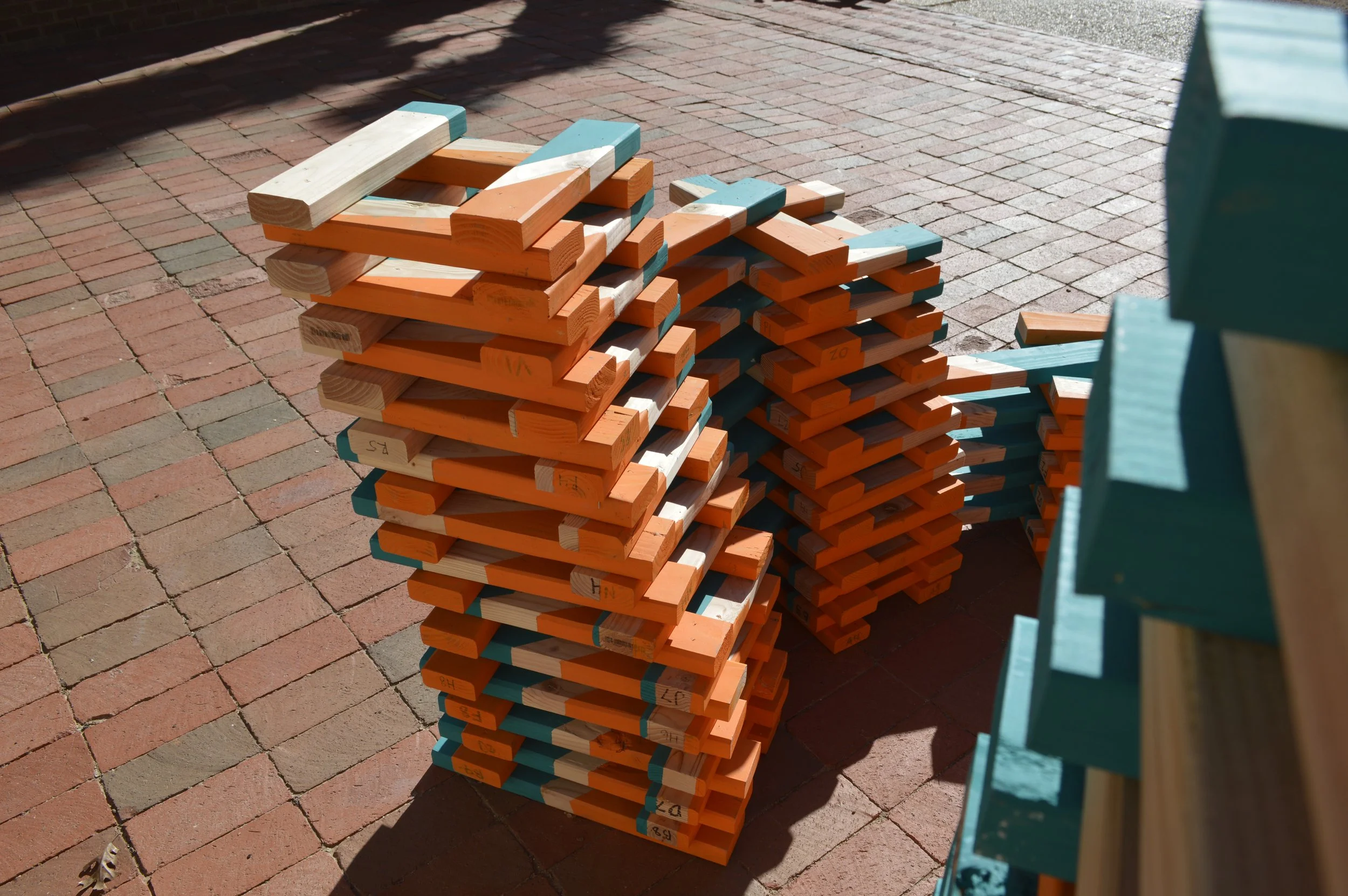
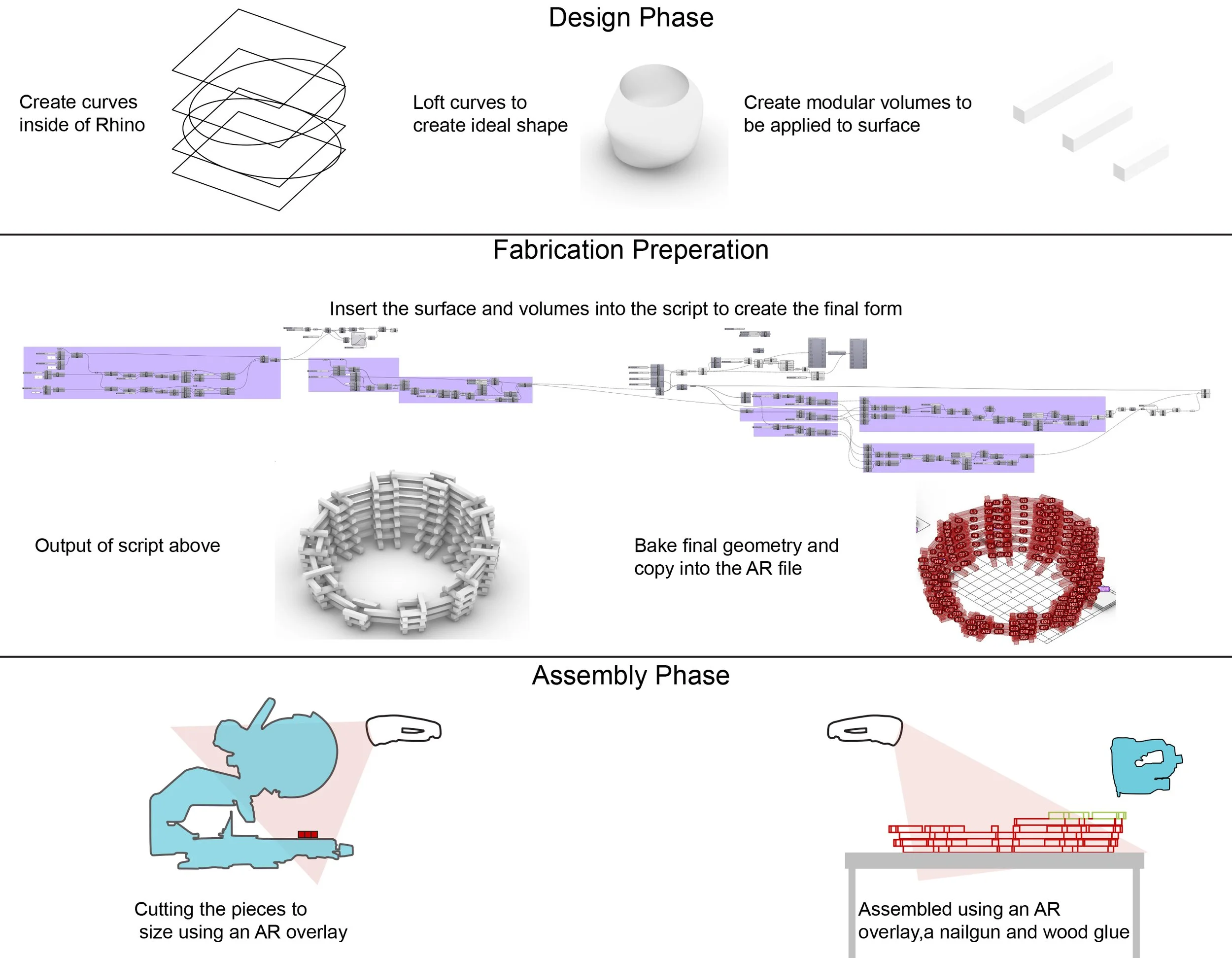
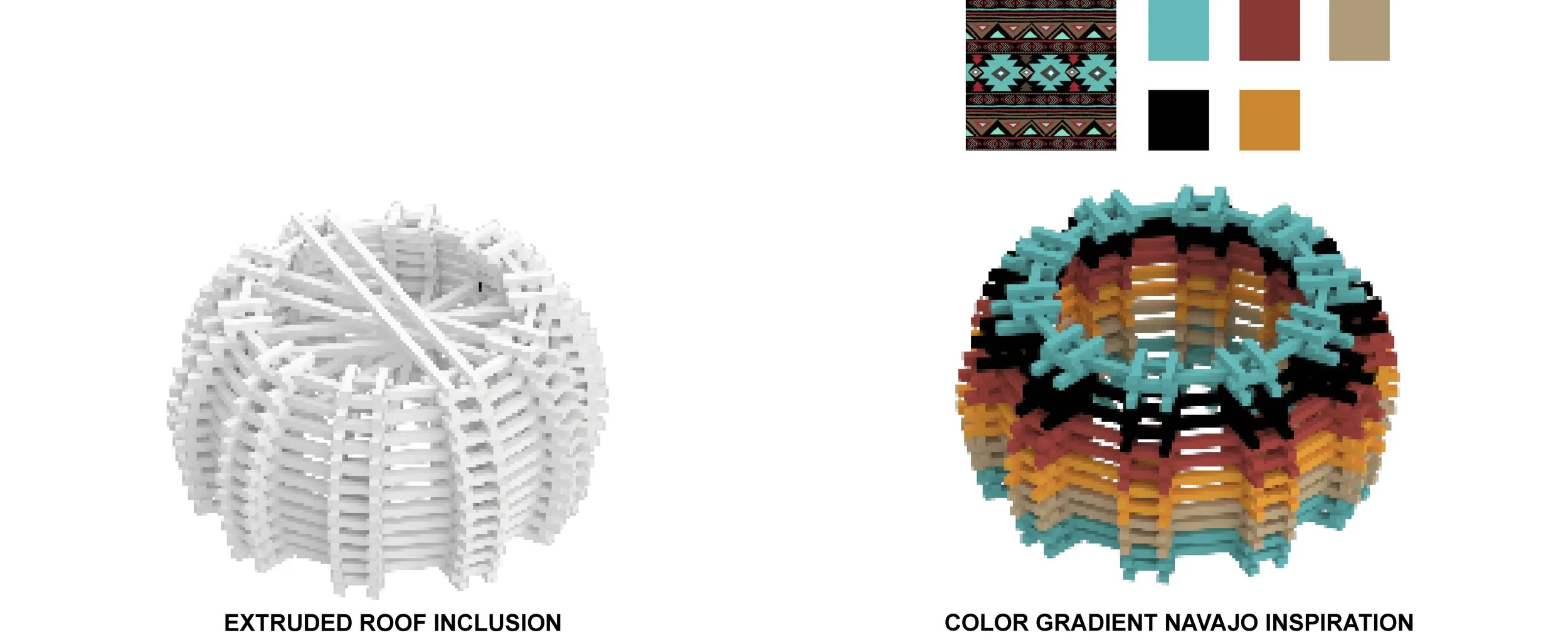
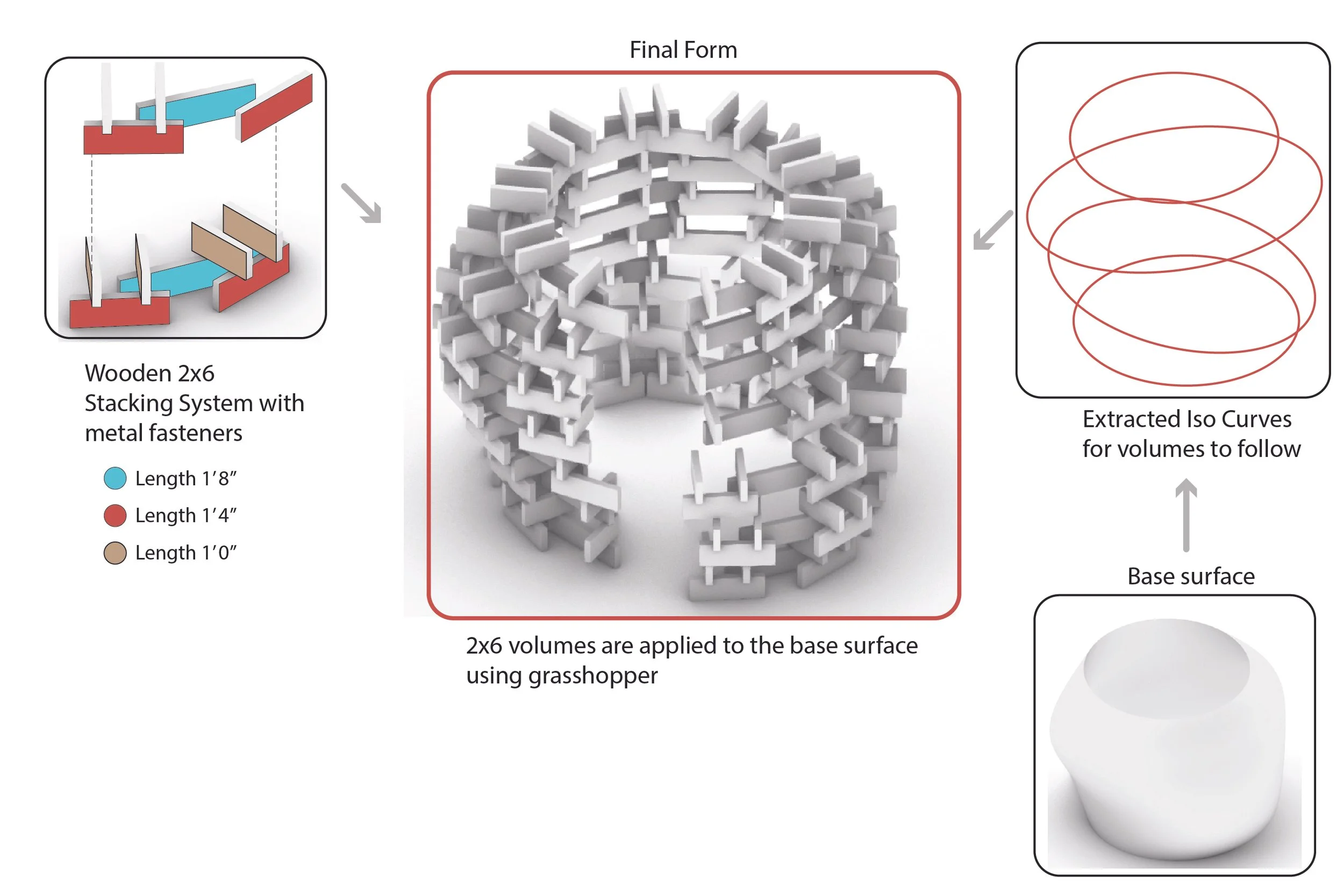
The computational workflow transforms a target surface into a rule-based assembly of standardized timber modules. Section curves generate the overall geometry, which is discretized into local frames and populated with repeated timber elements of standardized cross-sections and variable lengths. Geometric variation emerges through the position and incremental rotation of these elements, enabling complex surface configurations while maintaining fabrication efficiency. A second parametric layer generates chromatic differentiation, assigning each component a position-specific two-tone configuration that collectively produces a continuous gradient across the assembled structure. Each element is further assigned an alphanumeric identifier linking its geometry, location, assembly sequence, and color configuration. By organizing these indexed components within a virtual worktable and transferring their information to an AR headset, the system maintains correspondence between the digital model and physical fabrication while enabling the workflow to scale across larger assemblies and alternative geometries.
AR-Guided Cutting and Assembly:
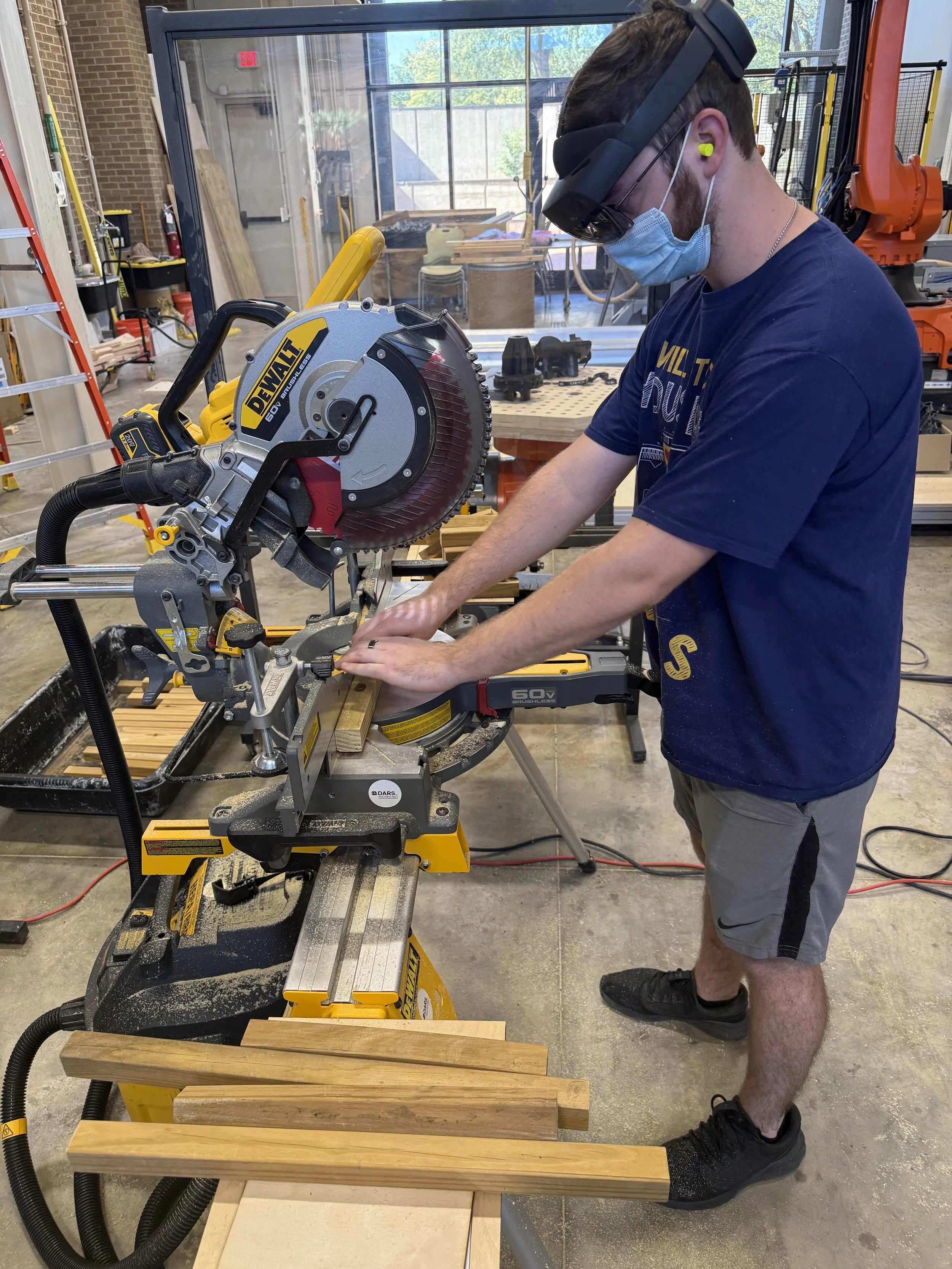
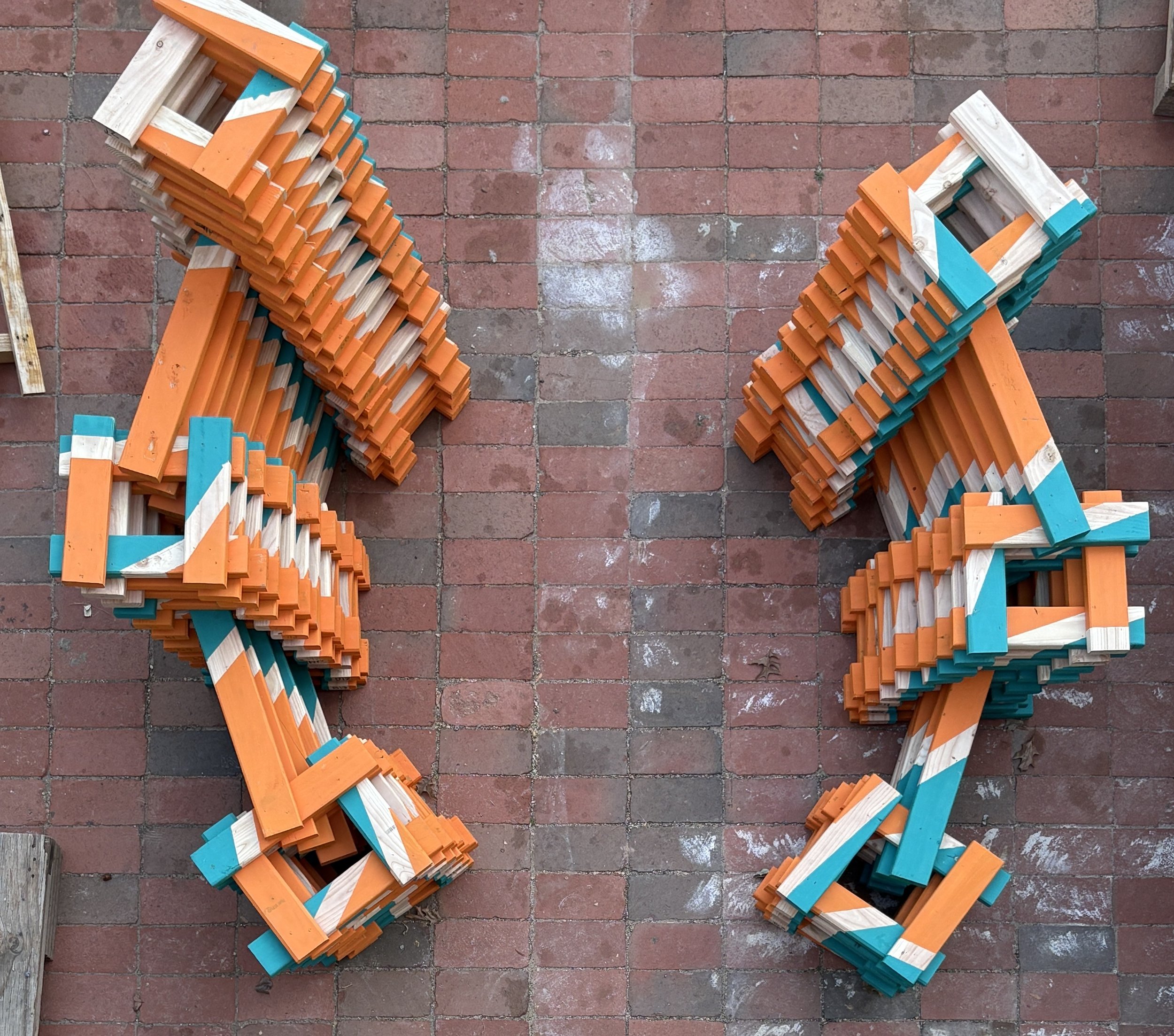
Raw timber stock is fabricated to the required lengths using AR holographic overlays that provide direct cutting references at the saw, reducing the need for manual measurement and marking. During assembly, the active component is identified and aligned with its corresponding position in the digital model, which communicates the location, orientation, and sequence of each element. Components are then secured using wood adhesive and pneumatic nails as the assembly progresses from the base upward. Rather than eliminating physical variation, the workflow uses AR as a spatial reference while allowing tolerances resulting from manual positioning, material variation, and cumulative stacking to remain within the built system. The interlocking geometry is designed to accommodate these deviations while preserving the overall configuration. Future iterations will explore AR-guided drilling and wooden dowel or pin connections as an alternative to pneumatic fastening, supporting a more precise, stable, and fully disassemble assembly system.
AR-Guided Marking and Painting:
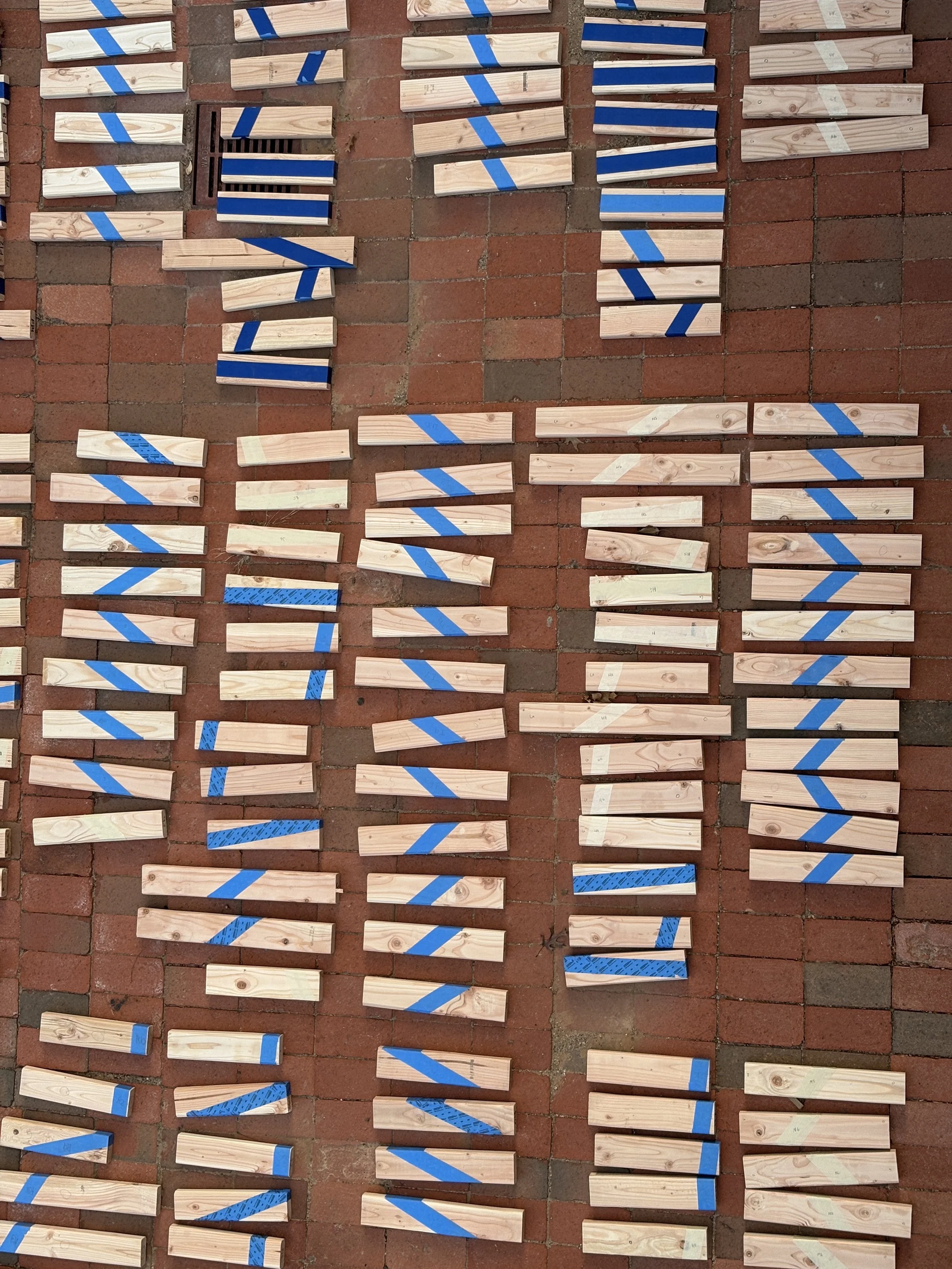
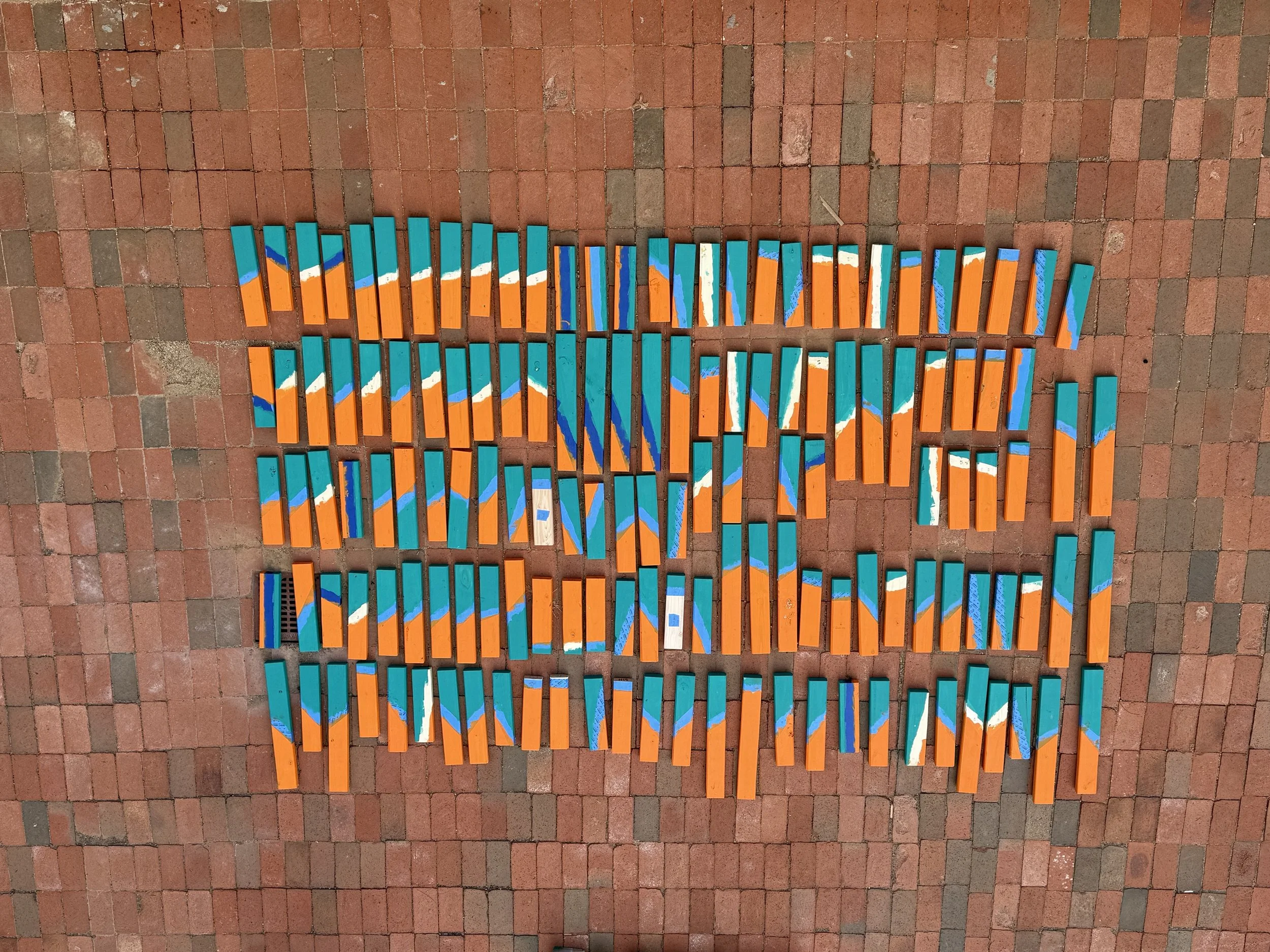
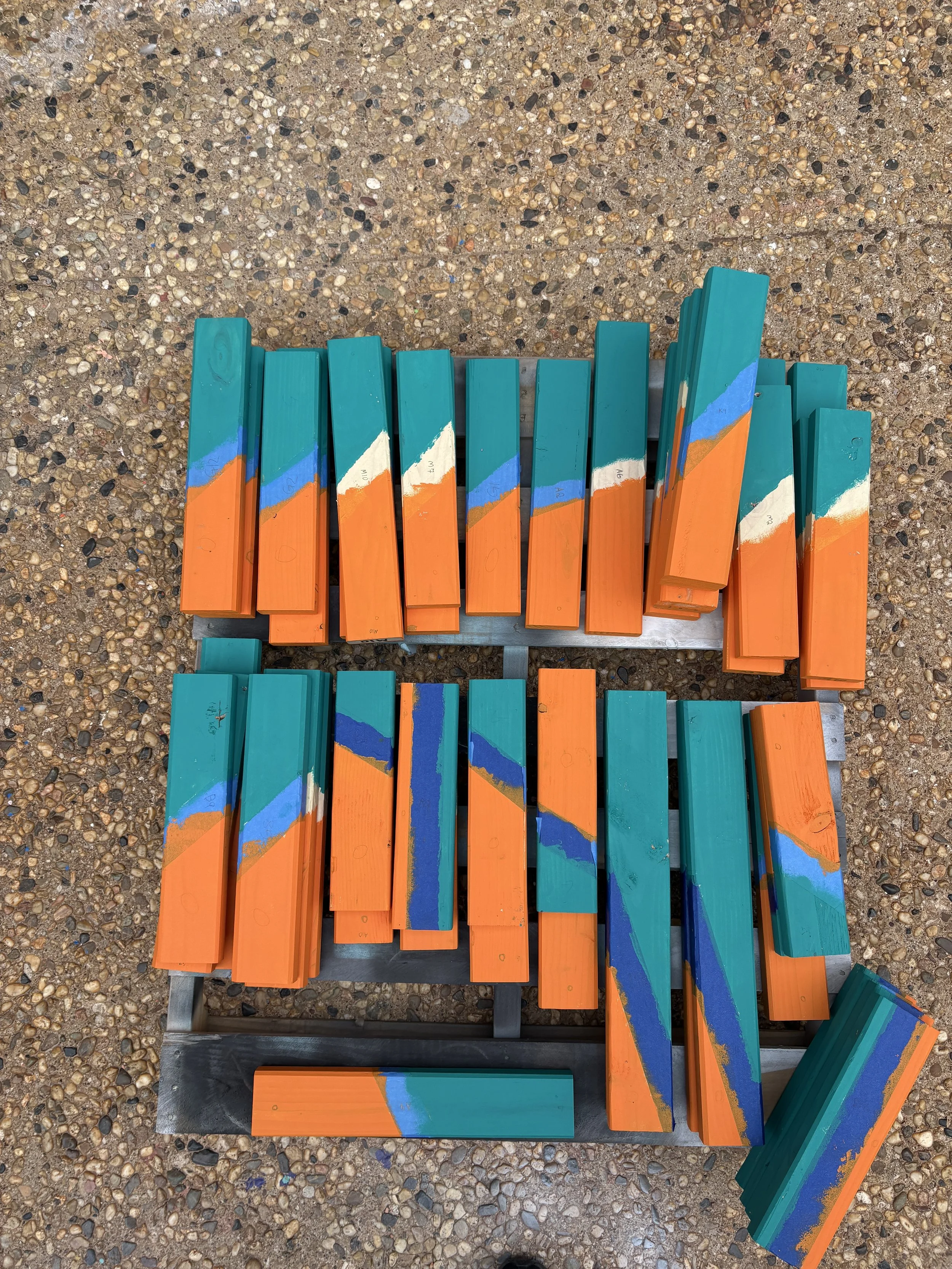
The same digital model and component-identification system extend into the marking and painting process, maintaining correspondence between each physical timber element and its digital counterpart. Using alphanumeric tags, students identify individual components on the virtual worktable while AR overlays display the assigned color boundary, proportion, and orientation directly on the physical timber. Students then manually mark and paint the two-tone configurations according to the computational assignments. While the digital model determines the color, location, and orientation of each component, the physical application remains intentionally manual, introducing controlled variation through the act of making. Component tags preserve digital-to-physical correspondence throughout painting, drying, sorting, and reassembly, allowing each element to return to its designated position. Once assembled, the individual color assignments collectively generate the continuous gradient and rotational chromatic pattern across the full-scale structure.
CASE STUDY : The Woven AR Painted Assembly
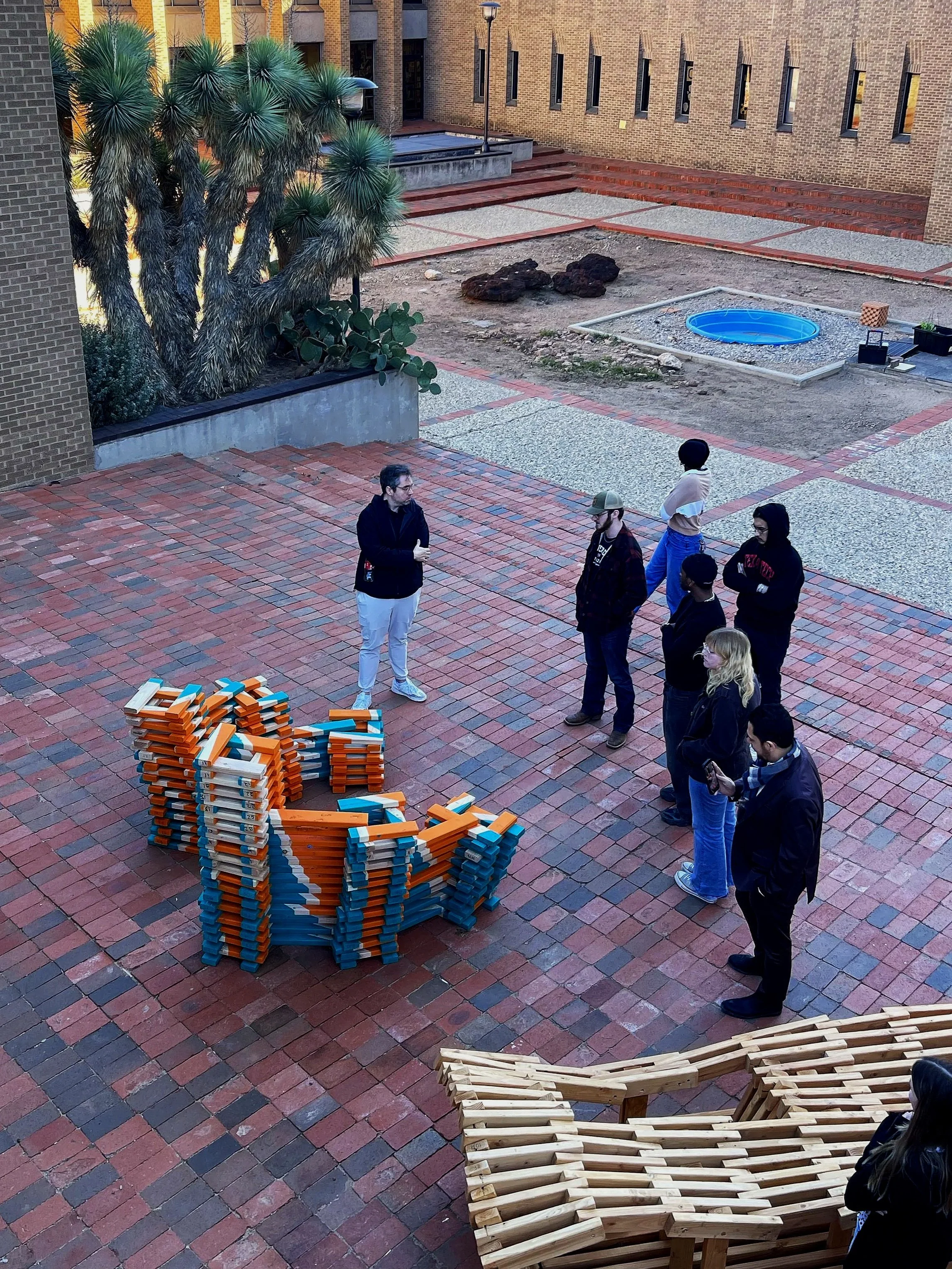
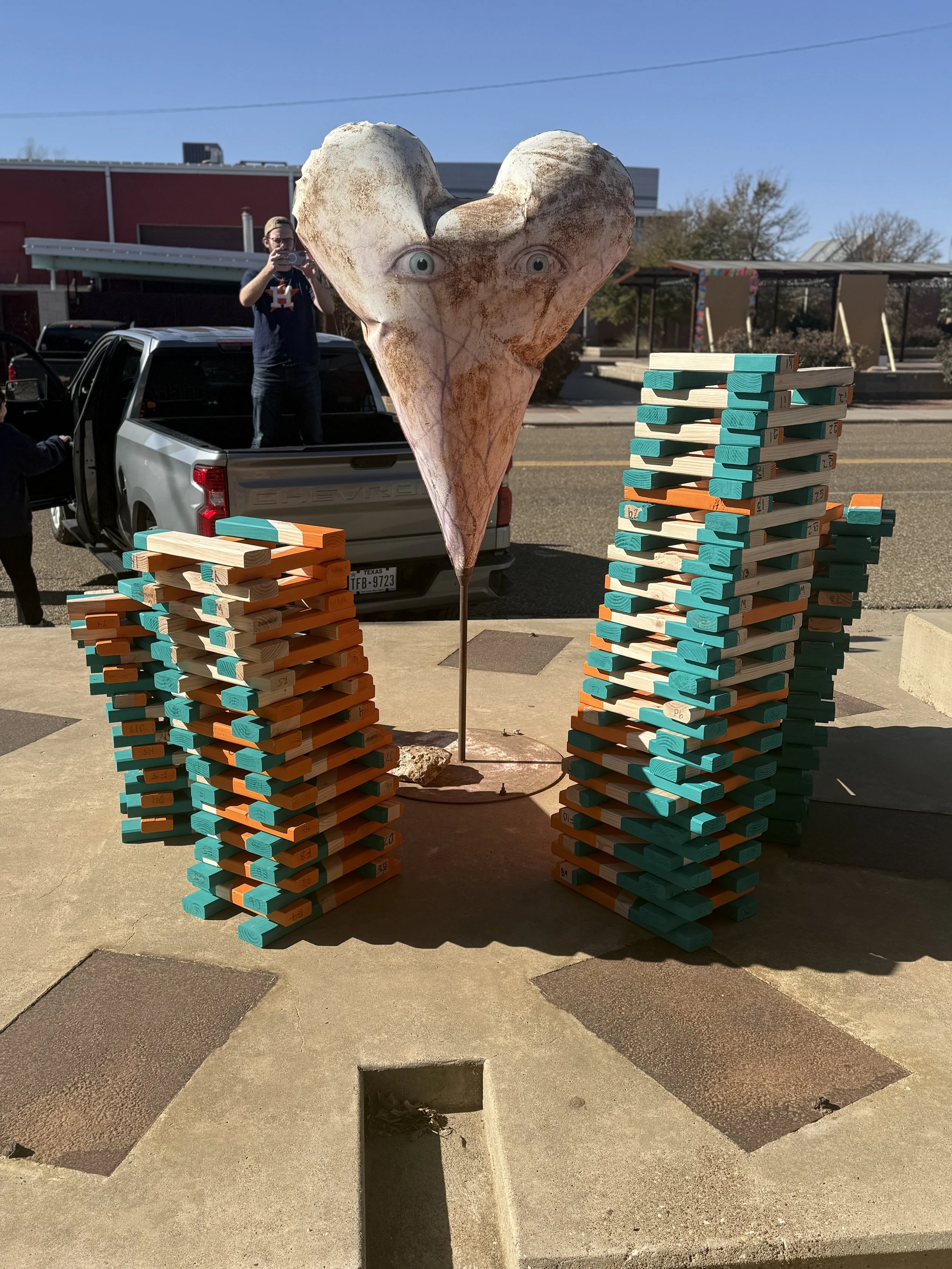
The Woven AR Painted Assembly is a full-scale folly and urban furniture system developed for a trailhead at Red Rock Park in Gallup, New Mexico. Inspired by the surrounding mesa profiles and high-desert landscape, the design uses interlocking stacked-timber modules to create seating, enclosure, and gathering spaces. A computational color system assigns ochre, turquoise, and natural timber tones to individual components, referencing regional material and color relationships without reproducing specific cultural patterns.
The prototype was fabricated and assembled using AR guidance, with holographic overlays directing timber cutting, placement, and assembly directly from the digital model. Each component was identified by an alphanumeric tag linking its physical location to its digital geometry and color assignment. Students then used AR to mark and hand-paint each timber element before returning the components to their designated positions. The individually painted elements combine to form a continuous gradient across the assembled structure, demonstrating how AR can connect computational design, fabrication, and manual craft within a single workflow.
![20251128_143825_HoloLens[1] (1).jpg](https://images.squarespace-cdn.com/content/v1/64aae2727398e76d5c31723f/3b4d6d37-5ddb-4c65-97cd-7321a3ac2f45/20251128_143825_HoloLens%5B1%5D+%281%29.jpg)
INFORMATION | CREDITS
Principal: Associate Prof. Dr. Sina Mostafavi
Graduate Part-Time Instructor: Bahar Bagheri
Texas Tech University HCoA Team:
Mckenzie Hines
Max Martin
Jai Shoin Mathis
Matthew Coyle
PUBLICATION | RECOGNITION
Publications:
SIGRADI 2026 :