Dutch Art In Robotic Motion
Research Development, Education and Training, and Outreach and Engagement
Dutch Culture USA
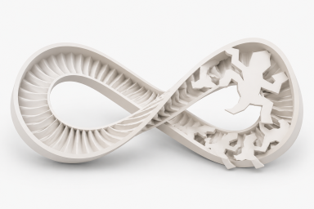
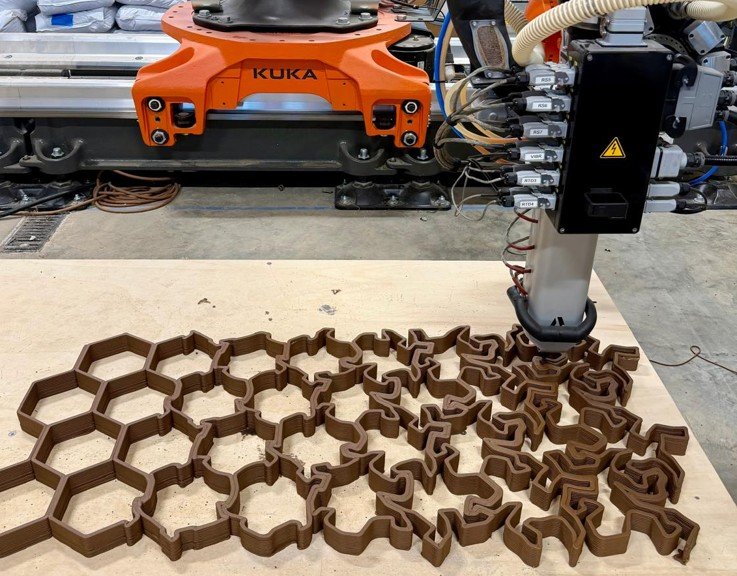
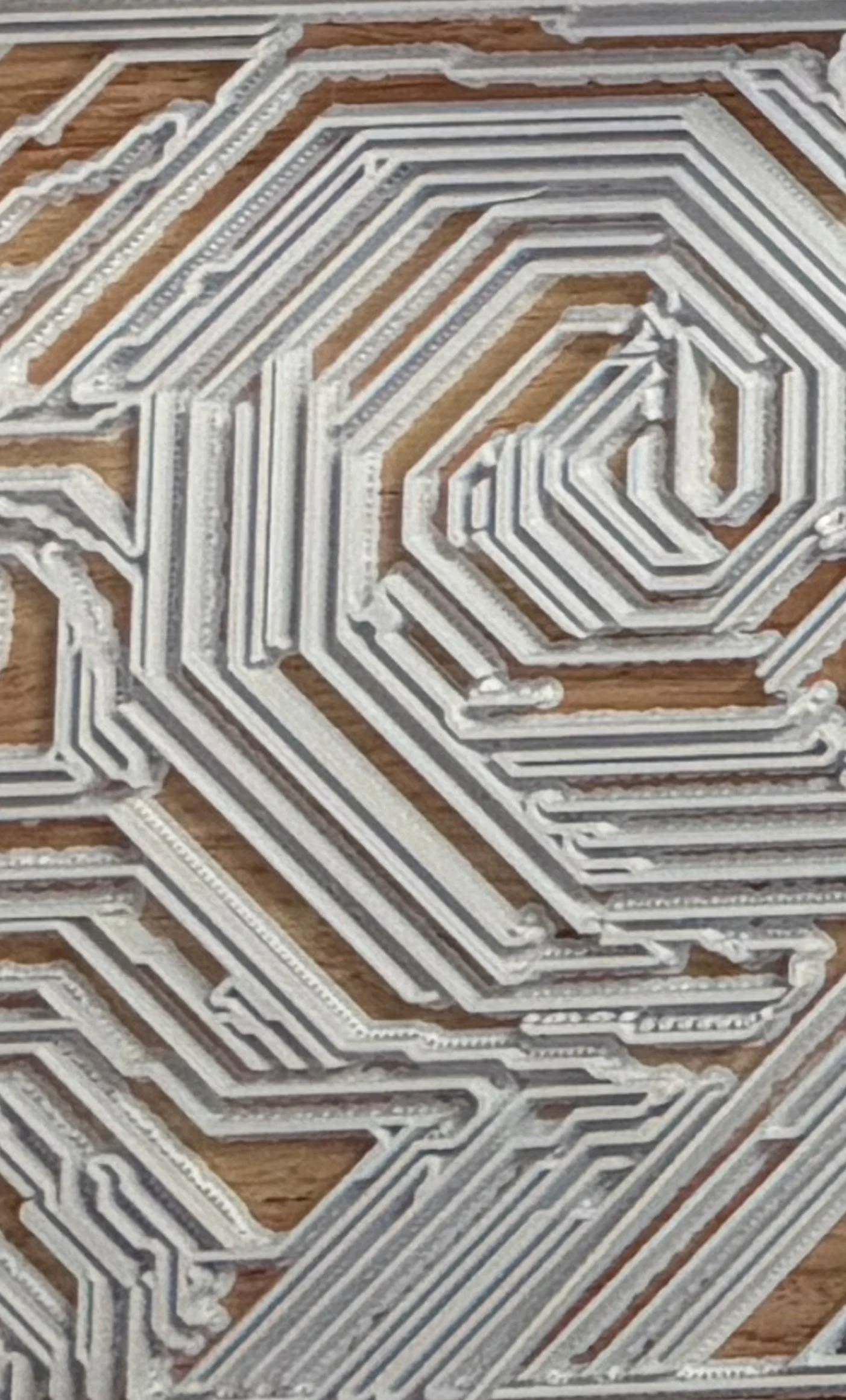
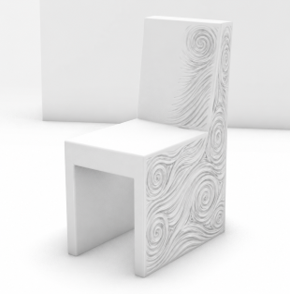
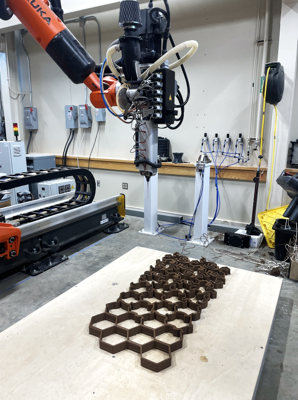
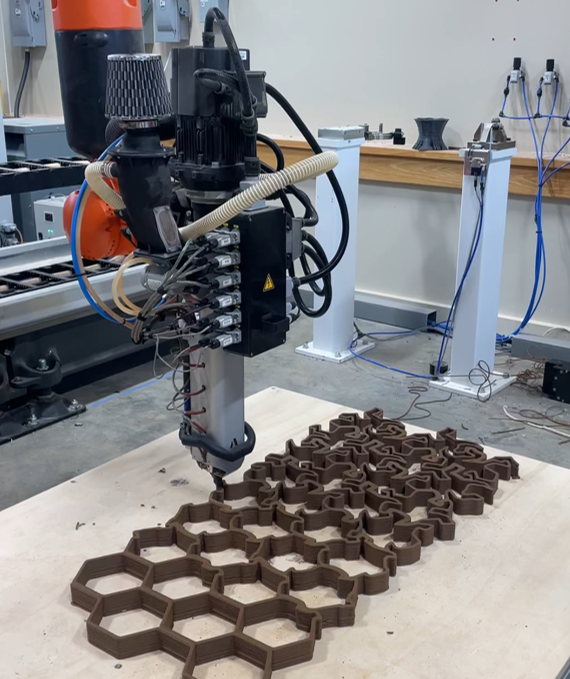
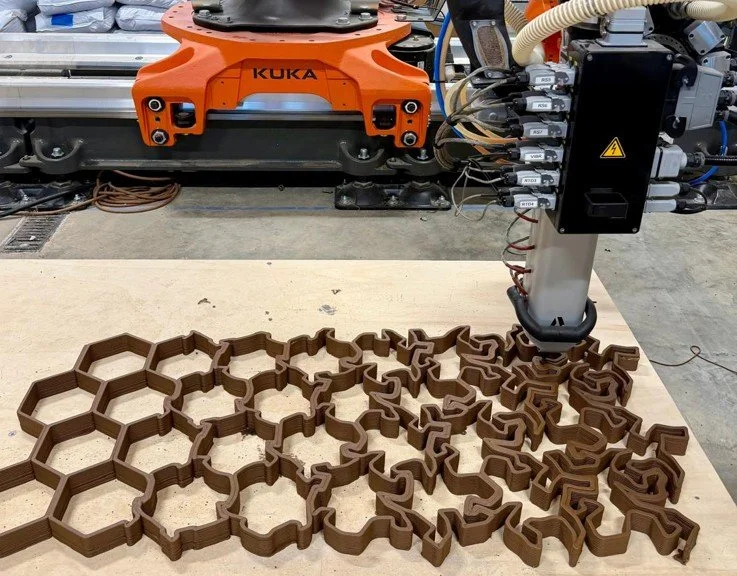
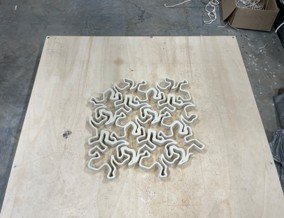
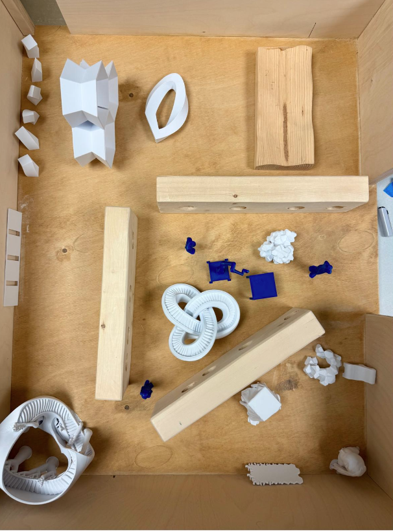
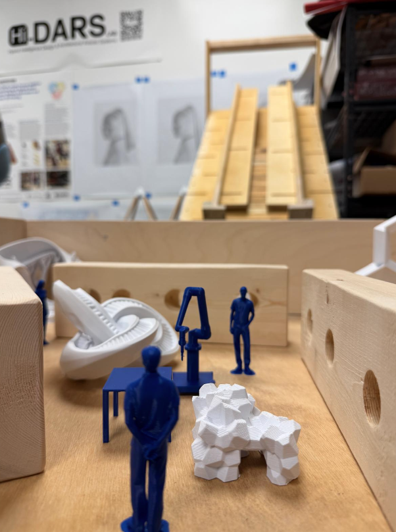
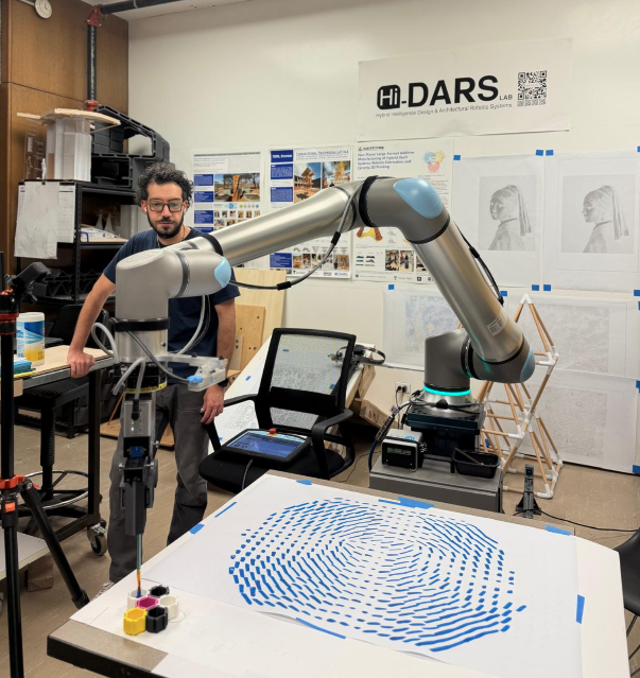
Dutch Art in Robotic Motion investigates how Dutch artistic heritage can be reinterpreted through contemporary architectural design and emerging design-build technologies. Developed through a multidisciplinary research-by-design framework, the project explores the works of M. C. Escher, Johannes Vermeer, and Vincent van Gogh, translating their distinctive artistic qualities into architectural-scale artifacts through artificial intelligence, computational design, robotic fabrication, and augmented robotic production. Rather than reproducing historical artworks or imitating their visual styles, the research examines underlying principles such as Escher’s tessellation, recursion, and spatial ambiguity; Vermeer’s perspective, illumination, and domestic spatial depth; and Van Gogh’s directional movement, chromatic intensity, and surface articulation. These interpretations are transformed into computational operations involving repetition, layering, orientation, relief, density, porosity, curvature, and geometric differentiation, which inform parametric modeling, robotic toolpath development, and experimental fabrication. The project integrates archival investigation, AI-assisted visual and textual inquiry, human–robot collaboration, large-format additive manufacturing, hybrid fabrication, and iterative prototyping to establish new relationships between cultural interpretation, material behavior, and architectural production. Robotic toolpaths serve not only as machine instructions but also as spatial and interpretive drawings that connect historical sources to physical artifacts. The research culminates in an exhibition environment that brings together archival materials, critical mappings, computational studies, fabrication experiments, and completed architectural assemblies. Through public exhibitions, guided discussions, workshops, and robotic demonstrations, the project invites audiences to engage with the processes through which artistic heritage is selected, interpreted, computationally transformed, and materially reconstructed. Ultimately, Dutch Art in Robotic Motion proposes a transferable framework for using AI, computational fabrication, and public engagement to spatialize cultural archives and reimagine artistic heritage through contemporary architectural practice.
Project Description
Van Gogh
ART WORKS
Project Description
Escher
Vermeer
Project Description
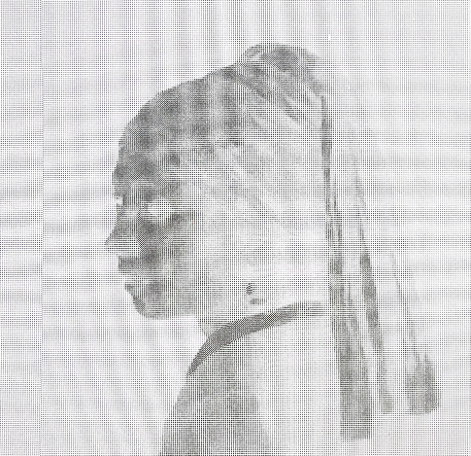
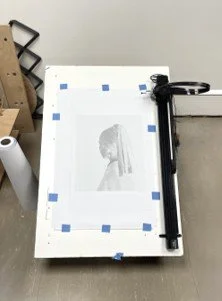
The outcomes of Dutch Art in Robotic Motion will be presented in a public exhibition at the Museum of Texas Tech University in Fall 2026. The exhibition will showcase architectural-scale artifacts, computational design studies, robotic fabrication experiments, and interpretive work inspired by Dutch artistic heritage. Through archival materials, process documentation, and interactive demonstrations, visitors will explore how AI-assisted inquiry, computational design, and robotic production transform historical artworks into contemporary architectural expressions.
Museum Exhibition
PUBLICATION | RECOGNITION
Publications:
Publication 01
AWARD | RECOGNITION
Award Name 01
INFORMATION | CREDITS
Principal Investigators:
Sina Mostafavi, Ph.D. (PI), Asma Mehan, PhD (Co-PI)
Texas Tech University Hi-DARS Team:
Masie Munoz, Tahmures Ghiyasi
TTU HCoA Additional Support:
TTU-HCoA : Technology Course | First Last name
External Community Partners:
Dutch Culture USA
Dutch Embassy